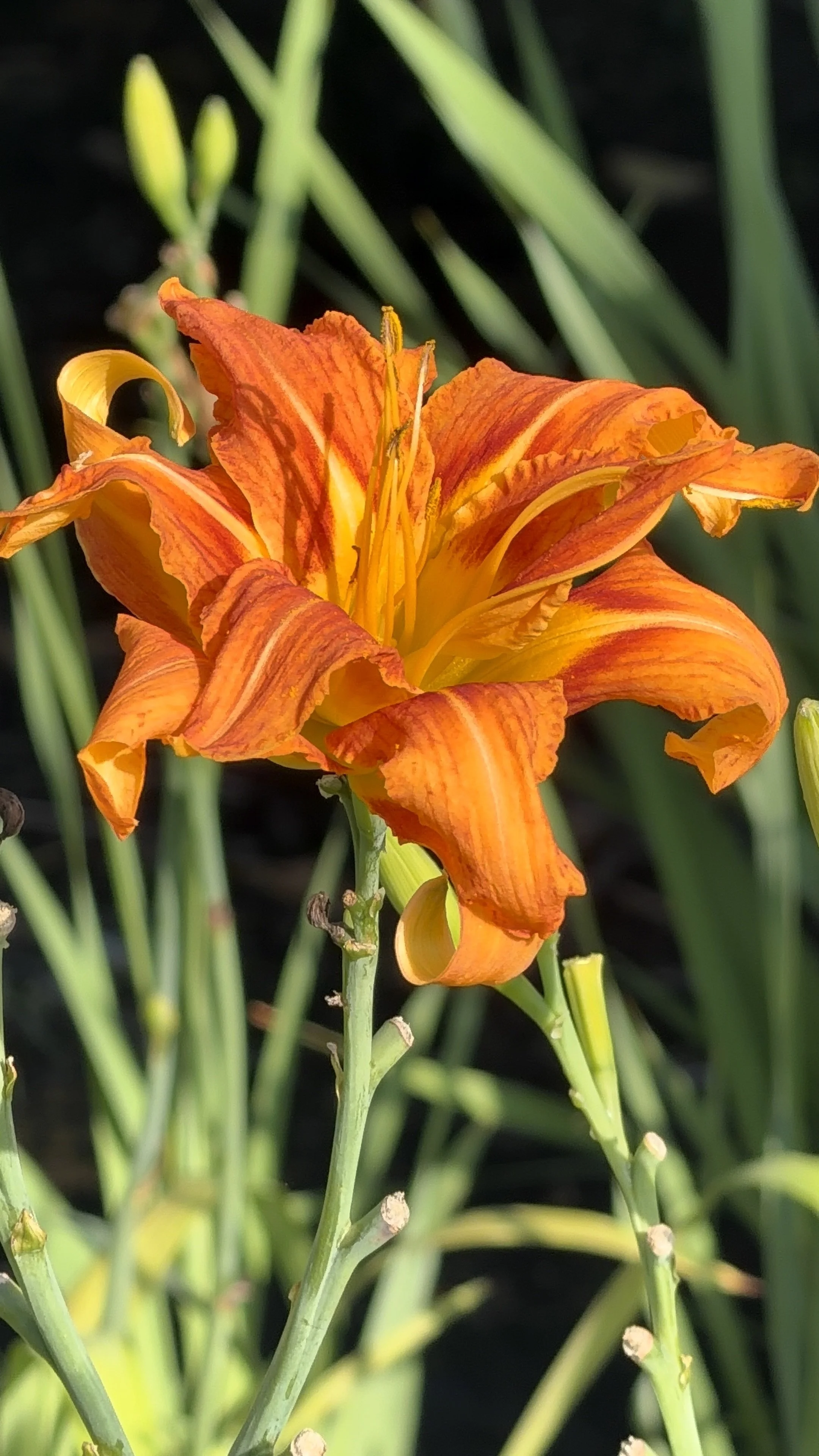
Orange Kwanso daylily blooming in my garden.
If you’ve ever driven past a ditch bursting with orange blooms in early summer, you’ve met a relative of one of my favorite garden plants: Hemerocallis fulva ‘Kwanso,’ the double orange daylily.
I have these blooming in my own garden, and I’ll be honest, the first time someone told me they were basically a fancier cousin of the “ditch lily,” I wasn’t sure how to feel about it. But once I learned more about what these plants actually do, I fell in love with them for a whole new reason.
Meet ‘Kwanso’
‘Kwanso’ is a double-flowered form of Hemerocallis fulva, the same orange daylily you’ll spot along roadsides, in ditches, and around old homesteads - which is exactly where it gets that nickname. It’s a plant that has quietly persisted for generations, and there’s something kind of beautiful about that kind of staying power.
The everyday details:
Hardy in zones 3-9
Full sun to partial shade
Blooms mid-season, June through July
Flowers are about 4” wide
Foliages reaches 20-24”; bloom stalks reach 36-48” tall
Low-maintenance and forgiving of less-than-ideal soil
About That “Invasive” Reputation
Here’s something interesting: ‘Kwanso’ and its wild cousin don’t spread by seed. The plants are sterile and simply don’t set seed the way most plants do. What they do have are rhizomes and tuberous roots, which can grow thick and spread steadily over time. That’s the real reason you see them naturalized along roadsides and in ditches; not because of seeds carried on the wind, but patient, persistent root systems that quietly claim a little more ground each season.
This same trait is exactly why they’re so useful for mass plantings, ground cover, and erosion control. If you have a slope that needs stabilizing or a stretch of yard that never seems to cooperate, this is one of those plants that earns its place.
Don’t have a garden bed to spare? These also do beautifully in a large container - my favorite pots, soil, and fertilizer for growing daylilies (even if you’re working with a patio or a small space) are linked below.
The Part I Really Want You to Know
Here’s what’s working for me lately, and it’s bigger than just a pretty bloom. These flowers are a genuine gift to pollinators such as butterflies, hummingbirds, bees, and more.
Pollinators need all the help they can get. It’s easy to overlook just how much rests on their tiny shoulders:
They enable reproduction in roughly 75% of flowering plants
They support about a third of the food crops we eat.
Together, bees, butterflies, moths, birds, beetles, and countless other insects help secure our food supply, support healthy ecosystems, and drive biodiversity.
They contribute hundreds of billions of dollars to the global economy.
Right now, many pollinators are struggling due to habitat loss, disease, and parasites. Environmental contaminants have made it harder for pollinators to find the nectar and pollen they need to survive, one of the simplest things any of us can do is give them more blooming spaces to work with.
That’s the quiet magic of a plant like ‘Kwanso.’ It’s beautiful, it’s nearly effortless to grow, and every bloom is doing a little bit of good in the world.
Make Room for What Matters
If this has you thinking about pollinators in your own landscaping, the USDA and the Pollinator Partnership are wonderful places to start:
USDA - Importance of Pollinators: usda.gov (People’s Garden Initiative)
Pollinator Partnership - Find Your Ecoregion Guide: pollinator.org/guides - scroll down if you already know your region or use their “Find Your Roots” tool to discover yours
My Favorite Finds For Growing Your Own
If you’d like to add a daylily like ‘Kwanso’ to your own space - garden bed or container - I’ve pulled together my go-to soil, fertilizer and large pots in my Amazon storefont; https://urlgeni.us/amazon/kwanso. Remember that as an Amazon Associate if you make a purchase from my links that I may, at no additional cost to you, receive a small commission.
One simple step at a time, we can all make a little more room for the bees, butterflies, and the blooms that support them.
Sometimes the plants worth keeping are the ones that quietly remind us that beautiful things don’t always have to be complicated.